


The Alta Irpinia inland area comprises a vast area and is located in the heart of the Campania Apennines, bordered to the south-west by the mountain range of the Picentini Mountains (with some reliefs of more than 1,800 m above sea level), to the north by the Formicoso plateau (with an average altitude of 800 m above sea level) and is crossed by the Ofanto River Valley. It is bordered to the north by the province of Foggia in Puglia, to the south by the province of Salerno, to the east by the province of Potenza in Basilicata and to the west by the Valle dell’Ufita in the province of Avellino; It is connected to Apulia by the A16 motorway.
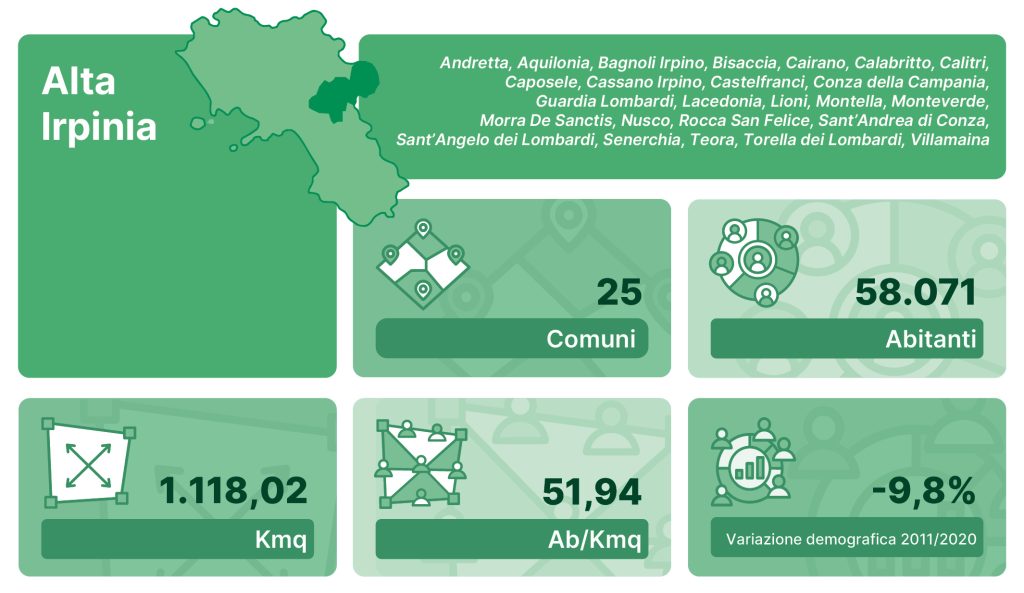
The total area is 1,118 square kilometers, with a resident population, according to ISTAT surveys as of 2022, equal to 59,342 inhabitants. The current average population density is 53 inhabitants/km2. The population living in the 25 municipalities of Upper Irpinia has been steadily decreasing over the last decade, from 66,397 to 59,342 (a decrease of about 9 per cent).%). The change in the resident population over the decade in question was not homogeneous across municipalities, but a change of 1.7 per cent can be observed.% the Municipality of Cassano Irpino al 27,6% of the municipality of Senerchia. The territorial analysis of Upper Irpinia shows a mountainous and rural area with a rich biodiversity and cultural heritage. However, there are many critical issues.
The area is characterised by small municipalities, with a declining population and low population density. Natural resources are significant, but often not fully exploited. Infrastructure, including transport and public services, is inadequate. Roads are often difficult to navigate, and essential services, such as education and health, are limited. Major challenges include depopulation, lack of job opportunities and the need for investment in infrastructure. Lack of services and difficult access limit socio-economic development.
Here is the Preliminary Internal Area Strategy “ALTA IRPINIA” Adopted: Regional Executive Decision No 478 of 17 July 2025
Here is the Summary of the Preliminary Strategy of the ‘Alta Irpinia’ Internal Area



 English (UK)