

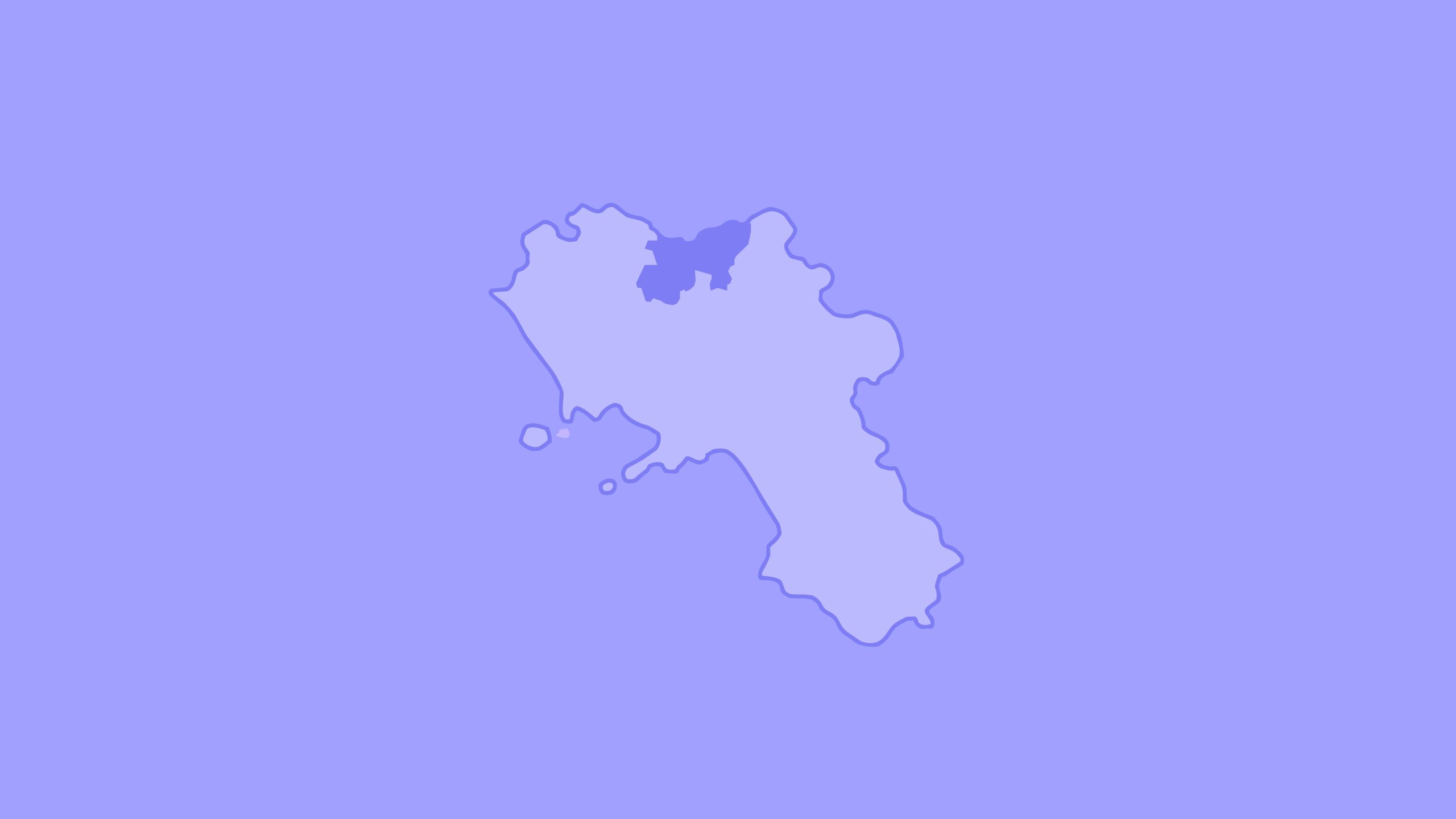
The ‘Area Interna Tammaro – Titerno’ is located in the north-western part of the province of Benevento. The total area is 818.20 km2, which represents 39.33 km2.% of the total provincial area and 5.98% of the regional. The population density (calculated with reference to population values at 31/12/2024) is 85.40 inhabitants/Km2, considerably lower than the provincial average (133.15 ab/Km2) and the regional average (424.38 ab/Km2).
The Inner Area is composed of 30 municipalities, of which 17 are classified as ‘mountain’ and 13 as ‘non-mountain’. 11 Municipalities in Peripheral Areas, 17 Municipalities in Intermediate Areas, 2 Municipalities Belt. 24 direct beneficiaries and 6 indirect beneficiaries. The Tammaro – Titerno area, like all the inland areas of the country, is affected by a phenomenon of progressive demographic desertification, with a consequent sclerotisation of urban and community social tissues. The phenomenon occurs in correspondence with the complexity of the observed beneficiary municipalities (direct and indirect). Observation of the data in the intercensuary period 1971-2001 shows a decrease in the overall population of – 8.65%.
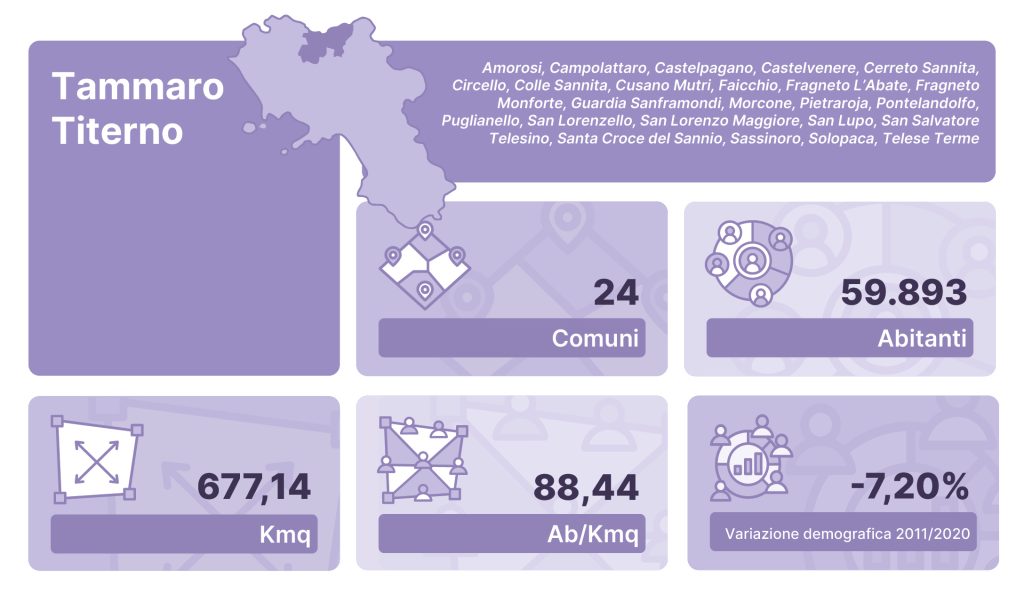
The demographic contraction, with the consequent and inevitable result of the sclerotization of urban contexts and existing social and community tissues and the simultaneous inability to exert attraction towards new residents and economies. This phenomenon has been in place for years and is inexorably involving even the young people of higher curricular education, whose exodus, since the university moment, is reaching worrying figures and irreversibility characterizations that go to impair in perspective the quality of the ruling class of local systems and the dignity and resilience of the social fabric.
The further decline in the population will, in turn, lead to a reduction in the use of services and their ability to reach efficient levels of provision of services (schools, hospitals, LPT), in a vicious circuit of continuous contraction of services and worsening of the conditions essential for the reversal of the demographic trend. From these dynamics is also achieving a progressive and inevitable divestment, with danger, of abandonment of real estate (private and public), primarily urban.
From an economic point of view, the presence of potentially promising production realities with a significant boost to innovation (especially agri-food) does not seem sufficient and capable, under current conditions, to drive the local economy towards higher levels of productivity and competitiveness.



 English (UK)